









Guaranteed
Diamond Certification
We believe your jewelry purchase should be one of joy. You should feel confident you're getting what you pay for
We believe that grading authorities should stand behind their work. That all diamonds can be, and should be, graded accurately and consistently

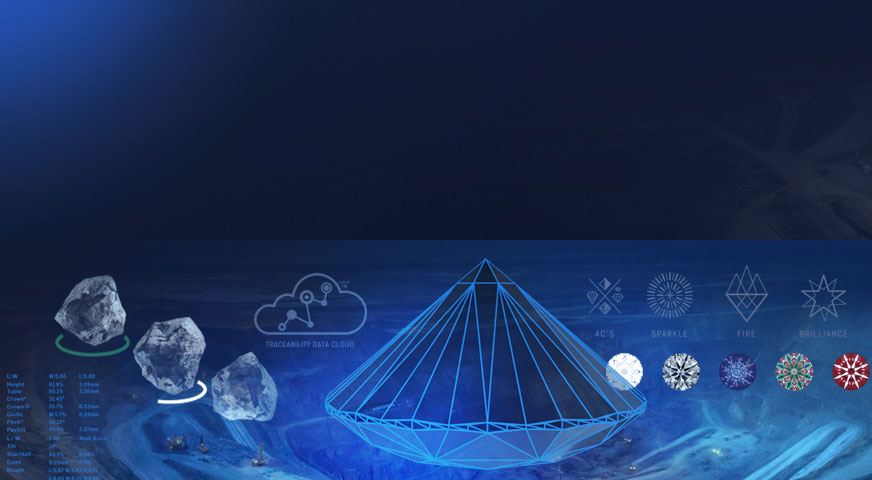
DISCOVER THE FUTURE
OF DIAMOND GRADING
planning your purchase
Get the knowledge to ask the right questions. To feel confident in yourself. Confident in what you give.
To make sure that you're getting the best diamond for your money.
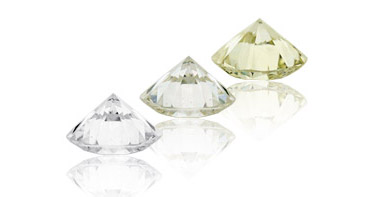
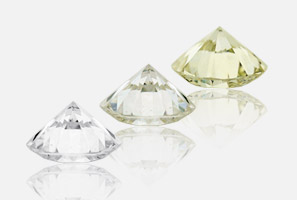
The 4Cs are the foundation of assessing diamond quality. Learn what they mean so you can find the perfect diamond.
Learn More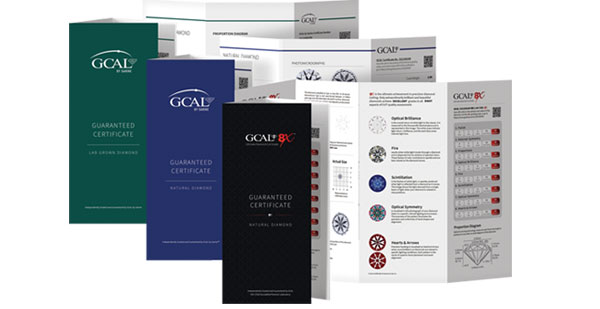
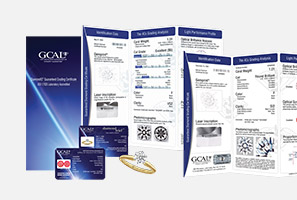
Before investing in a diamond, know who's rating the quality. Each grade difference means big money. Be sure your diamond is accurately graded.
Learn More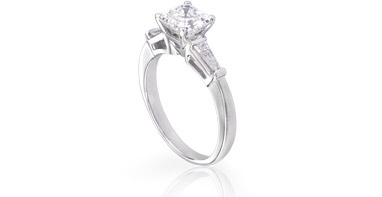
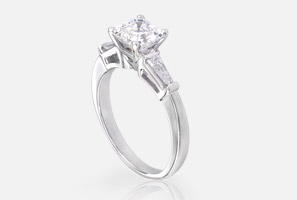
Bigger or higher quality? See how each diamond grading factor affects price so you can make the right decision within your budget.
Learn Moreexplore our services
When you need gemological expertise, rely on GCAL's team of
highly trained gemologists, for accurate and unbiased analysis.
-
CERTIFICATION
 CERTIFICATIONRead More
Ensure accurate 4C's quality grading of your diamonds with unbiased and guaranteed GCAL certification
-
ANALYTICAL SERVICES
 ANALYTICAL SERVICESRead More
Verify the authenticity of your natural loose or mounted diamonds and detect undisclosed lab grown diamonds
-
METAL TESTING
 METAL TESTINGRead More
Confirm your jewelry meets FTC standards for precious metal content and is free of toxic metals
-
QA TESTING
 QA TESTINGRead More
Implement a hassle-free testing protocol to ensure all your jewelry products meet your corporate standards
-
GEMPRINT
 GEMPRINTRead More
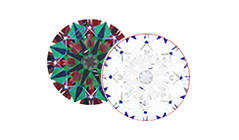
Protect your investment with the most advanced diamond fingerprinting and tracking technology
-
EXPERT SERVICES
 EXPERT SERVICESRead More
Rely on our experienced experts to provide solid evidence based reports and expert witness testimony
-
APPRAISALS
 APPRAISALSRead More
Evaluate fine jewelry assets for estate, fair market, liquidation, collateral and legal matters
-
PALMIERI'S MARKET MONITOR
 PALMIERI'S MARKET MONITORRead More
Subscribe to the diamond and gemstone 'blue book' pricing guide for wholesale and auction markets














WHAT THEY'RE SAYING


"Dear GCAL..we work with almost all major labs. None of which come close to the professionalism and courtesy, shown towards us the way only GCAL can."
Your certificates are always accurate and that's why I use them. I value them equally with GIA
"It has been a great partnership with GCAL, and everyone in the team goes above and beyond their role to help us meet our business objectives."
"You are the best in support and product. Gemprint is the best thing we have ever done."
"You guys are the best around. Once we point out your guarantee against what the bigger labs do, there are no more questions about your lab, you put your money where they can see it in writing. Please keep up the good work, you will continue to get our business"
"Excellent all around. A great resource for more than just grading stones. A+++++"
"GCAL always exceeds my expectations"
"All our employees love using the GCAL report when showing diamonds to our customers"
"Angelo and Don have been an absolute pleasure and have gone out of their way to help us combat issues of potential counterfeit jewelry being sold"
"It is a pleasure to do business with GCAL. The most professional and accurate lab I have worked with in my 30 years of being in the industry"
"Great company to deal with. Honest ,fair, and customer service is the best of any lab"
"Appreciate Mr. Palmieri's monthly overview of the state of the global diamond community"
"The services of GCAL are exceptional. Their verification process should be an industry standard. This is an essential consumer protection program"
"Fantastic organization with wonderful ethical culture"
"GCAL is open, transparent and very easy to work with, they really stand out against other laboratories"


